
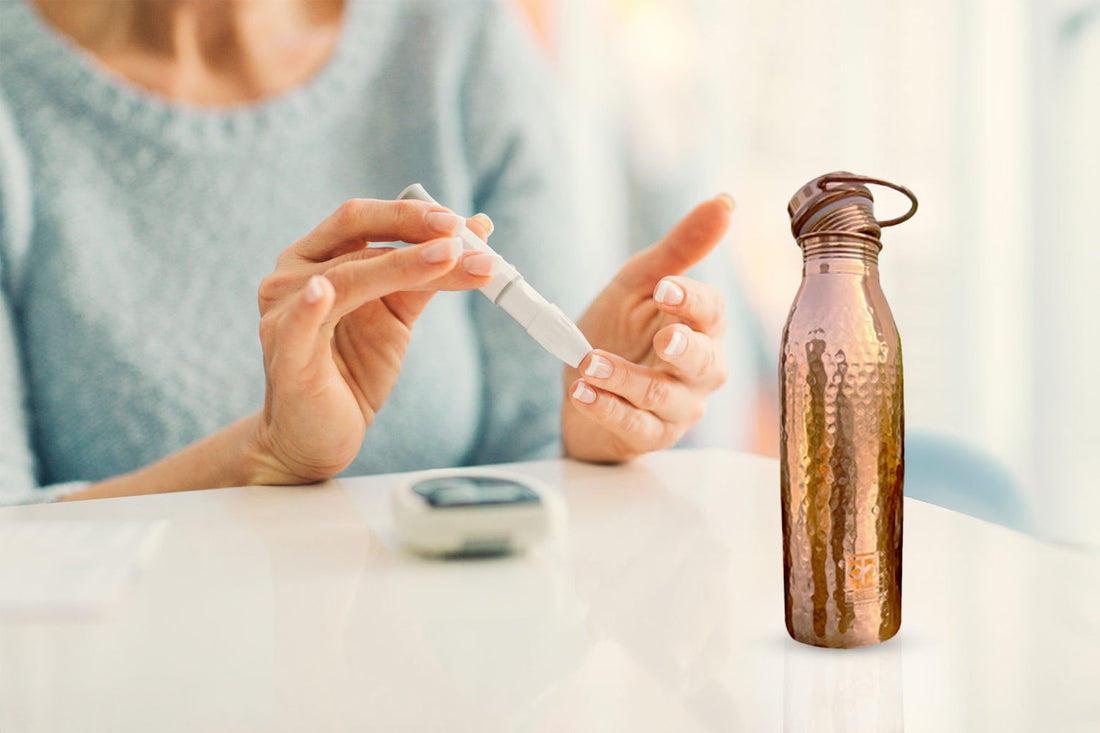
Short answer: copper is an essential mineral, and researchers have found that copper levels are often different in people with diabetes. But the research is mixed, it mostly shows associations rather than causes, and there is no evidence that drinking copper water or taking copper lowers blood sugar or treats diabetes. If you have diabetes or prediabetes, your care plan should come from your doctor.
We make copper water bottles, and we want our customers to have accurate information. Here is what the science actually says.
Why copper comes up in diabetes research
Copper is part of several enzymes the body relies on, including copper-zinc superoxide dismutase, one of the body's main antioxidant enzymes. Because diabetes involves higher oxidative stress, researchers have studied whether copper status plays a role.
What the studies found
- Copper levels are often different in diabetes. Many studies report higher blood copper in people with type 2 diabetes compared with people without it. Others report differences in the copper-to-zinc balance.
- Both too little and too much may be a problem. Copper deficiency can disturb metabolism, but excess copper can also increase oxidative stress. The relationship is not simply "more copper is better".
- Most evidence is observational. These studies show that copper levels and blood sugar problems occur together. They do not show that changing copper intake improves blood sugar.
- No good trials show a benefit. We are not aware of reliable clinical trials showing that copper supplements or copper water lower blood sugar, improve insulin sensitivity or prevent diabetes complications.
Is copper water helpful for people with diabetes?
Water stored overnight in a pure copper vessel contains trace amounts of copper. Drinking it is a long-standing Ayurvedic tradition, and for most healthy adults it is safe when done correctly. But it should not be thought of as a way to manage blood sugar.
What a copper bottle can genuinely help with is a simple one: making it easier to drink plain water instead of sugary drinks. Staying well hydrated and choosing water over juice or soda is good advice for everyone, including people with diabetes.
If you have diabetes, kidney disease or a liver condition, check with your doctor before adding copper water to your routine, as some conditions affect how the body handles minerals.
Copper in a balanced diet
Most people get enough copper from food. Good sources include:
- Nuts and seeds
- Whole grains
- Legumes such as lentils and chickpeas
- Shellfish
- Dark chocolate (in moderation)
See 50 foods rich in copper and our guide to copper deficiency.
How to use a copper bottle safely
- Fill it with plain drinking water at night.
- Drink that water in the morning, after about 6 to 8 hours.
- Use water only: no juice, lemon water, milk, tea or hot drinks.
- Clean it every week or two with lemon and salt.
Read more: Is it safe to drink from copper?
Frequently asked questions
Is copper good for diabetes?
Copper is an essential nutrient, but there is no evidence that extra copper improves diabetes. Research shows copper levels are often altered in diabetes, not that copper treats it.
Does copper water lower blood sugar?
No. There is no reliable evidence that copper water lowers blood sugar. Do not use it in place of any treatment your doctor recommends.
Can people with diabetes drink copper water?
Many can, but check with your doctor first, especially if you also have kidney or liver problems.
Explore our handmade copper water bottles, made in our own workshop in India.
This article is for general information only and is not medical advice. It is not intended to diagnose, treat, cure or prevent any disease. Always follow the advice of your healthcare provider.